Concrete Slab & Foundation Work
Your foundation is too important to trust to anyone but experienced professionals.
The Critical Importance of Proper Foundation Work
Everything starts with the foundation. A properly constructed concrete slab provides stable, level support for your entire structure. Whether you're building a new home, adding a garage, or constructing a storage building, the foundation determines how well the structure performs for decades to come.
Poor foundation work leads to expensive problems. Cracks in walls, doors that won't close properly, and uneven floors all trace back to foundation issues. Water intrusion, structural damage, and unsafe conditions follow. That's why we take foundation construction seriously and never cut corners on materials or methods.
Here in Tarboro and throughout North Carolina, soil conditions vary significantly. Clay soils expand when wet and contract when dry. Sandy soils drain well but may need special preparation. We test and evaluate your site conditions before recommending the appropriate foundation design and construction methods.
What Sets Quality Foundation Work Apart
- Comprehensive site evaluation and soil testing before design
- Proper excavation depth and base material selection
- Adequate reinforcement with rebar or wire mesh
- Moisture barriers and proper drainage systems
- Correct concrete mix design for local climate conditions
Types of Concrete Slabs and Foundations We Build
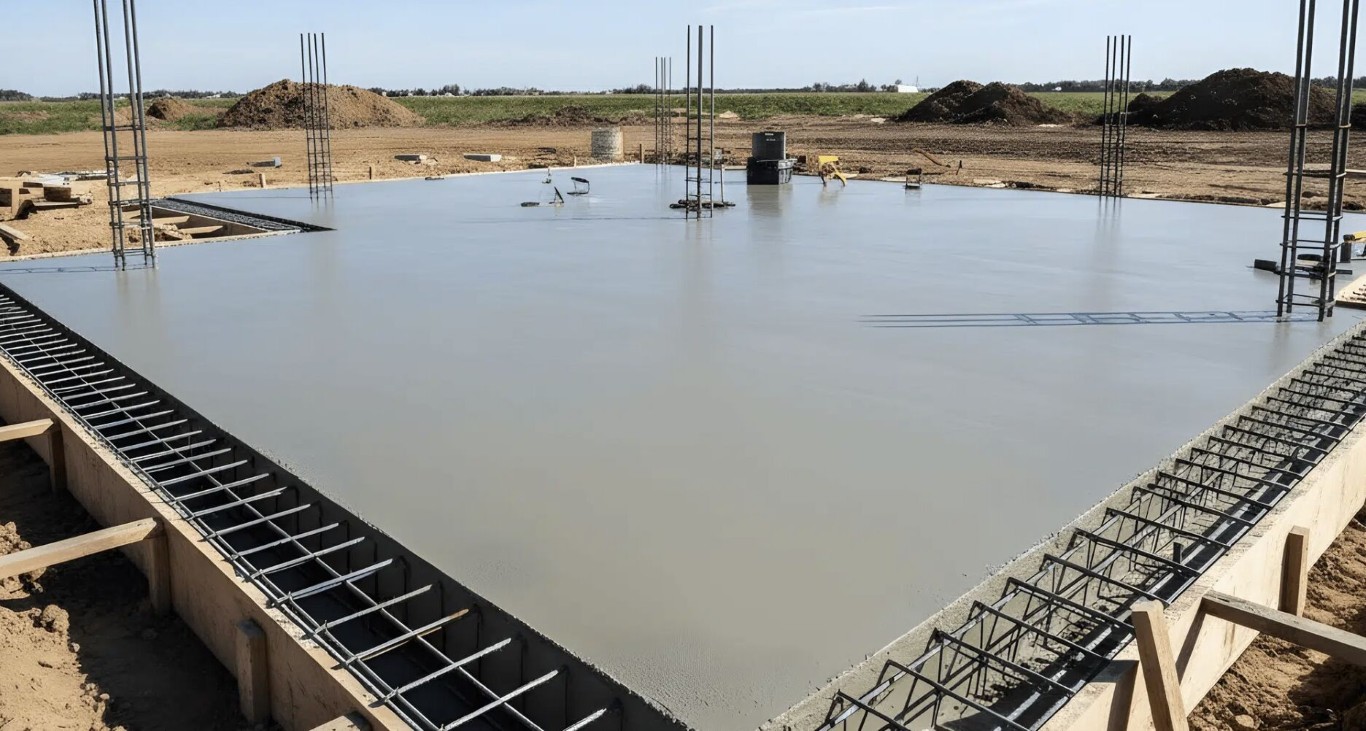
Slab-on-grade foundations are the most common for residential and light commercial construction. The concrete floor sits directly on prepared soil, with thickened edges for load-bearing walls. This design works well in our climate and provides cost-effective, durable support. Proper site preparation prevents settling and cracking.
Monolithic slabs pour the foundation and floor in one operation. The edges are thicker to support walls while the center section forms the floor. This approach saves time and provides excellent strength. We use this method for garages, sheds, and smaller structures where speed and simplicity matter.
Specialized Foundation Applications
Stem wall foundations combine a concrete footing below frost line with a short wall supporting the slab. This design works well on sloped lots or areas with poor drainage. The elevated design keeps wood framing away from ground moisture and provides better ventilation.
For additions and outbuildings, we often pour simple concrete slabs that serve as both foundation and floor. These can be insulated for heated spaces or left uninsulated for storage and workshops. We customize thickness, reinforcement, and finish based on your intended use.
Our Foundation Construction Process
Site preparation starts with clearing vegetation and marking utilities. We excavate to the required depth, removing unsuitable soil and organic material. The subgrade gets compacted to prevent future settling. We install drainage systems if needed to divert water away from the foundation.
Base material installation comes next. We spread and compact crushed stone or gravel to provide stable support and drainage. This layer distributes loads evenly and prevents moisture from rising through the slab. Thickness varies based on soil conditions and structural requirements.
Reinforcement and Finishing
We install moisture barriers, typically 6-mil polyethylene sheeting, over the base. This prevents ground moisture from migrating through the concrete. Forms go in next to contain the concrete pour and define the edges. We double-check elevations and dimensions before placing reinforcement.
Steel reinforcement resists cracking and adds structural strength. Rebar placement follows engineering specifications. We support the steel at the proper height within the slab. The concrete pour itself requires careful timing and skilled finishing to achieve proper strength and surface quality.
Frequently Asked Questions
Need a Solid Foundation?
Get in touch today to discuss your foundation project and receive a detailed quote.